🫘
Is Soy Bad for You? The Tofu Question, Answered With Studies
The feminizing-soy myth against the actual meta-analyses, what the breast cancer research really found, the honest caveats — and the soy-free tofus (chickpea, pumpkin seed, hemp) for anyone who still wants out.
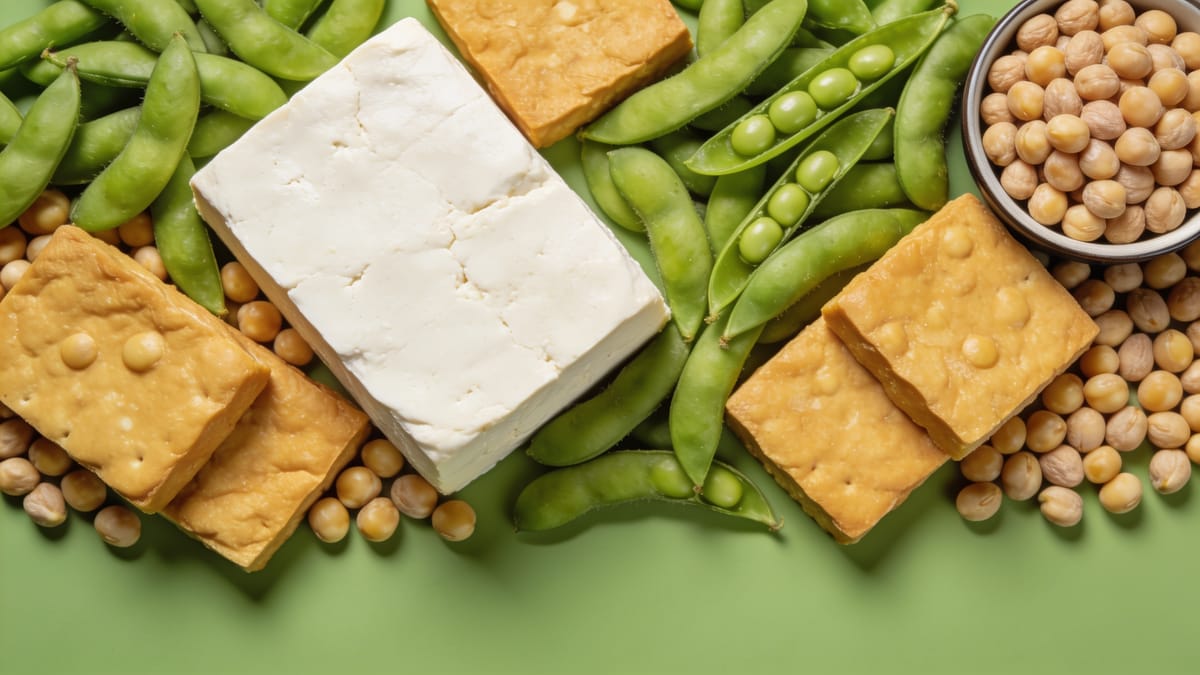
Tofu shows up in a lot of our recipes — 43 dishes on this menu use soy in some form — so the question deserves a straight answer, with the studies on the table: is soy bad for you? Short version: the scary claims came from rodent studies and internet telephone; the human clinical evidence points the other way. And if you still want out of soy, there are real alternatives — including a chickpea tofu you can make tonight.
Where the fear came from
Soy contains isoflavones — plant compounds structurally similar to estrogen. Feed them to rodents in enormous doses and you can produce hormonal effects, which spawned two decades of “soy is feminizing” and “soy feeds breast cancer” headlines. Rodents metabolize isoflavones very differently than humans, and isoflavones bind human estrogen receptors far more weakly than estradiol — preferring a receptor subtype with largely different effects. But the claim outran the biology.
What the human research actually shows
- Men's hormones: a meta-analysis of clinical studies found no effects of soy protein or isoflavones on testosterone, free testosterone, or related hormones in men (Hamilton-Reeves et al., Fertility and Sterility, 2010) — a finding confirmed by an expanded 2021 update of the same analysis covering dozens of trials.
- Breast cancer: the evidence flipped the fear on its head. In the Shanghai Breast Cancer Survival Study — 5,033 breast cancer survivors followed for years — higher soy food intake after diagnosis was associated with lower mortality and recurrence (Shu et al., JAMA, 2009). The American Cancer Society and the American Institute for Cancer Research both now state soy foods are safe for survivors and may be protective.
- Heart: soy protein has carried an FDA-authorized heart-health claim since 1999 (25g/day in place of animal protein modestly lowers LDL).
- Populations: East Asian populations have eaten tofu daily for centuries — including Okinawa, one of the most-studied longevity regions on Earth.
The honest caveats
- Thyroid medication: soy can interfere with levothyroxine absorption — take the medication several hours apart from soy foods, and talk to your doctor.
- Soy allergy is real and common enough to take seriously — the alternatives below are for you.
- Isolates ≠ whole foods: the weakest links in soy research involve highly processed soy protein isolates in bars and shakes. Tofu, tempeh, edamame, and miso — the forms we cook with — are where the good evidence lives.
- The GMO objection: ~95% of US commodity soy is genetically modified and herbicide-intensive — but that crop is mostly feed and oil, and it's moot here anyway: certified-organic soy (the only kind in Rootful recipes) prohibits GMO seed by law.
Soy-free tofus, ranked by usefulness
- Chickpea tofu (Burmese shan tofu) — the winner. Chickpea flour and water, set like polenta, no coagulant or pressing. Slices clean, fries crisp, takes any marinade. Our Crispy Shan Tofu with Chili-Lime Drizzle (16g protein, soy-free, gluten-free) is the recipe.
- Pumpkin-seed tofu (sold as “Pumfu”) — dense, higher-protein than soy tofu, store-bought convenience.
- Hemp tofu — nutty flavor, complete protein, firmer texture.
- Fava and lupin tofus — newer arrivals worth trying when you see them.
- Know the difference: sesame tofu (goma-dofu) and almond “tofu” are traditional starch-set custards — lovely, but not protein swaps.
Our position
We cook with organic tofu, tempeh, and edamame without hesitation — the human evidence supports them as among the best protein sources in a plant-based kitchen. And because no single food should be mandatory, the menu carries soy-free protein anchors too: search the menu for the soy-free tag, or start with the shan tofu. As always: education, not medical advice — bring your personal situation (thyroid conditions especially) to your doctor.
Keep reading
- 💪 Where Do Vegans Get Protein? A Complete Answer, With Receipts
- 🧂 Low Sodium Vegan Meals: Why We Cap Every Dish at 500mg
- 🍃 Sugar-Free Plant-Based Cooking: The Stevia Playbook
- 🚿 How to Wash Pesticides Off Produce (And What Washing Can't Do)
- 🫙 Cook the Bulk Aisle: A Menu From the Bins at Dill Pickle Food Co-op
- 🥡 High-Protein Vegan Meal Prep: A Week Above 25g Per Meal